Cold treatment temperatures by country and fruit: complete 2026 guide
Cold treatment keeps the fruit pulp at or below a set temperature for a fixed number of consecutive days. The United States regulates it with the APHIS T107 schedules, but China, the European Union, Japan, South Korea, India, Taiwan, Thailand and New Zealand have their own protocols. Here they are together, by destination and by fruit.
🌐 Español
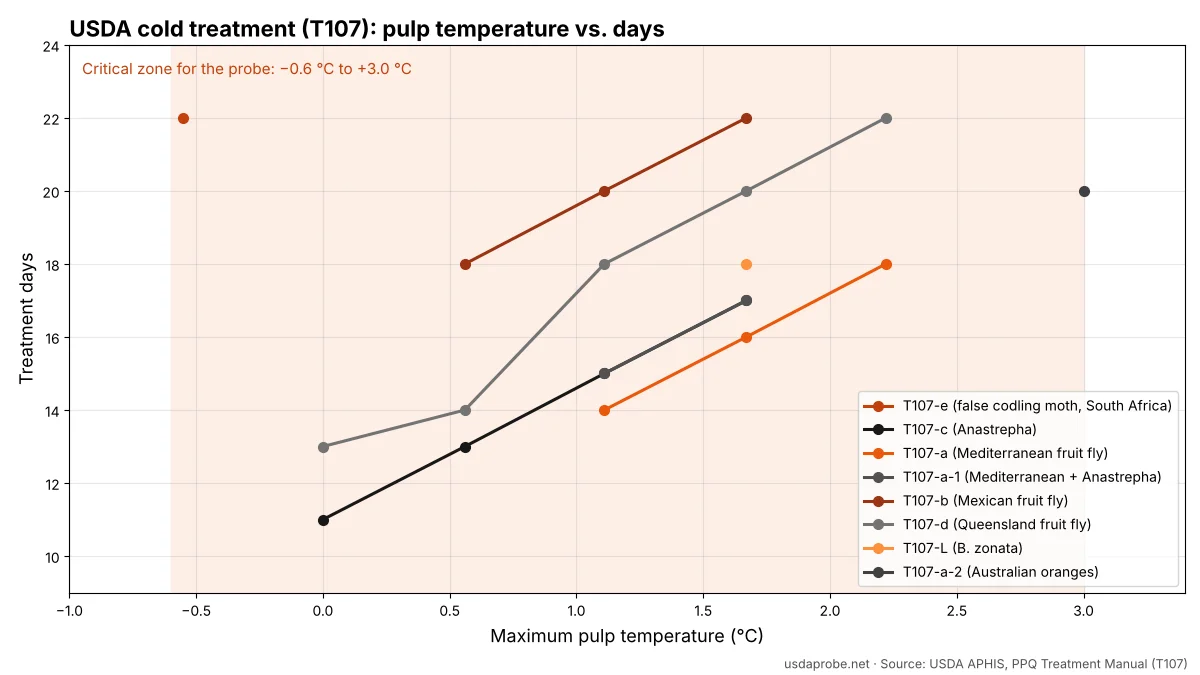
How to read a cold treatment schedule
- Pulp temperature, not air temperature. It is measured with probes inserted in the center of the fruit and connected to the USDA channels of the reefer controller.
- "X °C or below for N days" means no probe may exceed that value during the whole period.
- The clock starts with the last probe: treatment begins when all pulp probes reach the target temperature. That is why fruit must arrive precooled.
- If the temperature is exceeded, depending on the protocol the treatment is extended or restarts at day 1.
United States: APHIS T107 schedules
The schedules are in the APHIS PPQ Treatment Manual. The one that applies to each fruit and origin is listed in the APHIS import requirements database (ACIR) and in the work plan with each country.
| Schedule | Pulp temperature → days | Pests | Fruits / origin |
|---|---|---|---|
| T107-a | ≤1.11 °C → 14 · ≤1.67 °C → 16 · ≤2.22 °C → 18 | Mediterranean fruit fly, Natal fruit fly | Apple, apricot, avocado, blueberry, cherry, citrus, grape, kiwi, litchi, nectarine, peach, pear, persimmon, plum, pomegranate, quince |
| T107-a-1 | ≤1.11 °C → 15 · ≤1.67 °C → 17 | Mediterranean fruit fly + Anastrepha (except A. ludens) | Apple, apricot, blueberry, cherry, grape, grapefruit, kiwi, mandarin, nectarine, orange, peach, pear, plum, pomegranate, quince, tangelo, clementine |
| T107-a-2 | ≤3.0 °C → 20 | Mediterranean fruit fly | Oranges and tangors from Australia |
| T107-a-3 | ≤2.0 °C → 16 · ≤3.0 °C → 18 | Mediterranean fruit fly | Lemons from Australia |
| T107-b | ≤0.56 °C → 18 · ≤1.11 °C → 20 · ≤1.67 °C → 22 | Mexican fruit fly (A. ludens) | Apple, apricot, cherry, grapefruit, litchi, longan, orange, peach, persimmon, plum, pomegranate, tangerine, white sapote |
| T107-c | ≤0 °C → 11 · ≤0.56 °C → 13 · ≤1.11 °C → 15 · ≤1.67 °C → 17 | Anastrepha (except A. ludens) | Apple, apricot, carambola, cherry, grape, grapefruit, orange, pomegranate, tangerine |
| T107-d | ≤0 °C → 13 · ≤0.56 °C → 14 · ≤1.11 °C → 18 · ≤1.67 °C → 20 · ≤2.22 °C → 22 | Queensland fruit fly | Apple, citrus, kiwi, pear |
| T107-d-1 | ≤1 °C → 14 · ≤3 °C → 15 | Queensland fruit fly | Cherries from Australia |
| T107-d-2 | ≤0 °C → 13 · ≤0.56 °C → 14 · ≤3.0 °C → 16 | Queensland fruit fly and B. neohumeralis | Oranges, mandarins, tangelos and tangors from Australia |
| T107-d-3 | ≤3.0 °C → 14 | Queensland fruit fly and B. neohumeralis | Lemons and grapefruit from Australia |
| T107-e | ≤−0.55 °C → 22 | False codling moth (FCM) and Ceratitis spp. | Apricot, citrus, grape, nectarine, peach, plum |
| T107-f | ≤0 °C → 10 · ≤0.56 °C → 11 · ≤1.11 °C → 12 · ≤1.67 °C → 14 | Fruit flies | Ya pear from China |
| T107-g | ≤−17.78 °C → 7 | Pecan weevil | Pecans and hickory nuts (not a fresh-fruit treatment) |
| T107-h | ≤0.99 °C → 17 · ≤1.38 °C → 20 | B. dorsalis, melon fly, litchi fruit borer | Carambola, litchi, longan, sand pear |
| T107-i | ≤1.11 °C → 14 · ≤1.67 °C → 16 · ≤2.22 °C → 18 | Mediterranean fruit fly | Barhi dates |
| T107-j | ≤0.99 °C → 15 · ≤1.38 °C → 18 | B. dorsalis (only pest) | Carambola, litchi, longan, sand pear |
| T107-L | ≤1.67 °C → 18 | B. zonata, Mediterranean, Natal, Anastrepha | Oranges and mandarins (Egypt) |
T107-e, the most demanding: it cannot start until all probes read −0.55 °C or below. If the pulp rises above −0.27 °C, 1/3 of a day is added for each day or part of a day above it. The extension must be done at 1.11 °C or below, and exceeding 1.11 °C at any time voids the treatment. Below about −1.38 °C there is a risk of freezing injury: the working margin is less than one degree.
Which schedule each origin uses for the United States
| Origin | Fruit | Schedule / measure |
|---|---|---|
| Uruguay | Blueberry | T107-a-1 |
| Uruguay | Citrus (orange, lemon, mandarins, hybrids) | Systems approach + T107-a (Mediterranean fruit fly) or T107-a-1 / T107-c (South American fruit fly); methyl bromide alternatives |
| Argentina | Blueberry | T107-a-1 in transit, in container |
| Peru | Blueberry | T107-a-1, or methyl bromide (T101-i-1-1 / T101-i-1-2), or irradiation in the US |
| Peru | Citrus (except limes) | Systems approach + T107-a-1 |
| Peru | Table grapes | T107-a-1 (also in ship holds since 2024) |
| Chile | Blueberries from Medfly areas | T107-a, or methyl bromide |
| South Africa | Blueberry | T107-a |
| South Africa | Citrus | T107-e |
| Namibia | Table grapes | T107-e + methyl bromide |
| Egypt | Oranges and mandarins | T107-L |
| Australia | Cherry / lemon / orange and mandarin | T107-d-1 / T107-a-3 or d-3 / T107-a-2 or d-2 |
| Colombia | Orange, grapefruit, mandarin, clementine | Mandatory cold treatment under 7 CFR 305 (Mediterranean + Anastrepha → T107-a-1) |
| Spain, Morocco, Israel | Clementines and citrus | T107-a in transit (Mediterranean fruit fly), with preclearance and fruit cutting; Morocco under a work plan since 2016 |
| China | Ya pear | T107-f |
Countries with their own protocol
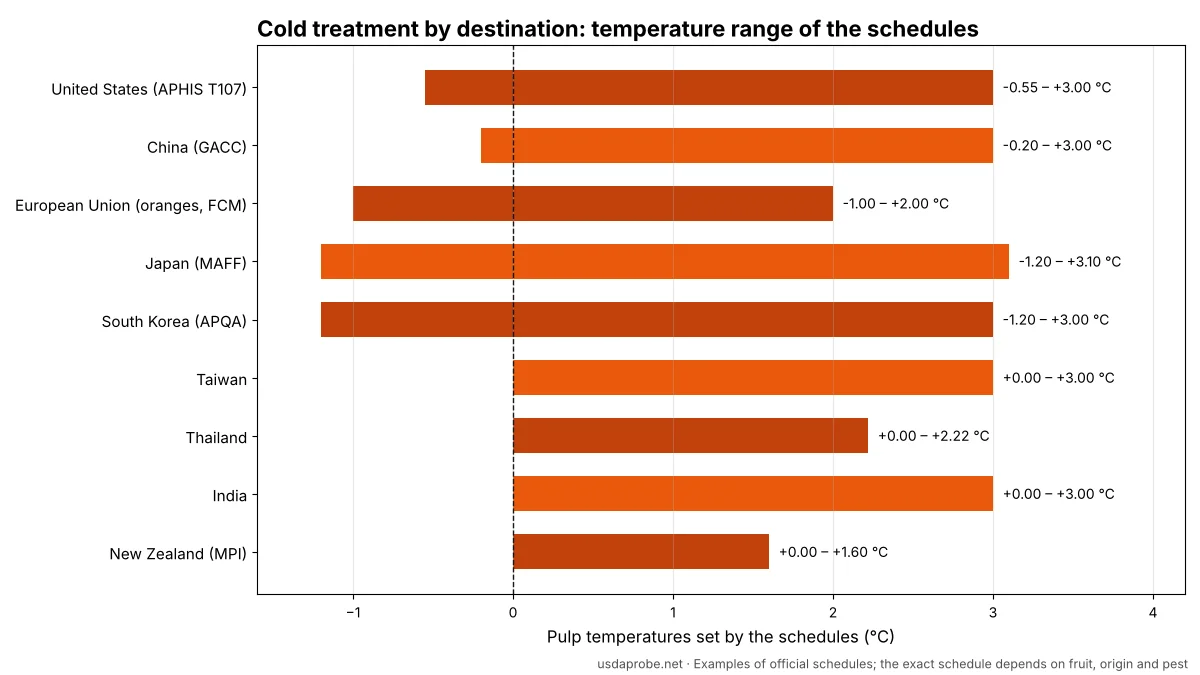
China (GACC)
China sets the schedule in each bilateral protocol and requires packhouses and cold facilities to be registered. For in-transit treatment, the phytosanitary certificate states the temperature, days, container and seal. Some Chinese protocols also require probes to measure between −3.0 and +3.0 °C with an accuracy of ±0.15 °C.
| Origin | Fruit | Pulp temperature → days |
|---|---|---|
| Uruguay | Lemon | ≤3 °C → 24 |
| Uruguay | Orange and mandarin | ≤2.22 °C → 21 |
| Uruguay | Blueberry | ≤1.11 °C → 15 · ≤1.67 °C → 17 · ≤2.22 °C → 21 (precooled to 4 °C or below) |
| South Africa | Orange, grapefruit, mandarin | ≤−0.2 °C → 16 · ≤1.0 °C → 19 (since 2026; previously −0.6 °C → 24) |
| South Africa | Lemon | ≤3 °C → 18 |
| Peru | Pomegranate | ≤1.11 °C → 15 · ≤1.67 °C → 17 |
| Peru | Citrus | ≤2.22 °C → 21 |
| Peru | Table grapes / blueberry | Grapes: ≤1.5 °C → 19 · Blueberries: 1.11 °C → 15 (air, at origin) or 2 °C → 22 (sea, in transit) |
| Brazil | Table grapes | ≤1.11 °C → 15 · ≤1.67 °C → 17 · ≤2.22 °C → 21 |
| Chile | Cherry (Medfly areas) | 15 days without exceeding 0.5 °C; if exceeded, the count restarts. Also in ship holds. |
| Australia | Grapes and cherries | ≤3 °C → 18 (Medfly-free areas) · ≤2.1 °C → 21 (Western Australia) |
| Spain | Citrus | ≤1.1 °C → 15 · ≤1.7 °C → 17 · ≤2.1 °C → 21 |
European Union (oranges, false codling moth)
Since 2022, oranges from countries with false codling moth (Thaumatotibia leucotreta), such as South Africa, Zimbabwe, Israel or Egypt, require cold treatment. Since 2023 there are two options: −1 to 0 °C for 16 days (precooled to 0 °C) or −1 to 2 °C for 20 days (precooled to 2 °C). Mandarins, grapefruit, lemons and limes are not covered by this requirement.
Japan (MAFF)
Japan rejects consignments whose treatment has to be completed at destination: the schedule must be finished during the voyage.
| Origin | Fruit | Pulp temperature → days |
|---|---|---|
| Argentina | Grapefruit / Valencia orange / lemon | ≤2.3 °C → 19 / ≤2.2 °C → 21 / ≤2.2 °C → 19 (counted once the pulp reaches 1.9 °C) |
| South Africa | Orange, grapefruit and lemon / clementine | −0.6 ± 0.6 °C → 12 / <0 °C → 14 |
| Australia | Table grapes | ≤1.0 °C → 16 · ≤2.0 °C → 18 · ≤3.0 °C → 20 |
| Australia | Minneola tangelo / grapefruit / lemon | ≤1 °C → 16 · ≤2.1 °C → 18 · ≤3.1 °C → 20 / ≤2 °C → 18 · ≤3 °C → 20 / ≤3 °C → 20 |
South Korea (APQA)
| Origin | Fruit | Pulp temperature → days |
|---|---|---|
| South Africa | Orange, lemon, grapefruit | −0.6 ± 0.6 °C → 24 |
| Australia | Orange | 1 ± 0.5 °C → 16, minimum 3 pulp probes |
| Australia | Table grapes | ≤1 °C → 16 · ≤2 °C → 18 · ≤3 °C → 20 |
| Israel | Citrus | 1.5 °C → 16 |
In Korea, probe records are downloaded on arrival and the treatment is not considered complete until APQA verifies them.
Taiwan and Thailand
For fruit from Medfly areas, both apply the classic scheme: ≤1.11 °C → 14 · ≤1.67 °C → 16 · ≤2.22 °C → 18 days. For Queensland fruit fly, ≤0 °C → 13 days. For citrus, Taiwan accepts ≤2.0 °C → 18 or ≤3.0 °C → 20. Thailand does not accept mixed-fruit containers under in-transit treatment.
India
For Mediterranean fruit fly, India accepts for several fruits ≤0 °C → 10 · ≤0.55 °C → 11 · ≤1.1 °C → 12 days, plus refrigeration during transit. For Queensland fruit fly: ≤0 °C → 13 · ≤0.55 °C → 14 · ≤1.1 °C → 18. For citrus the scheme is ≤3 °C → 20 days (Mediterranean fruit fly) or 16 days (Queensland). For oranges from Spain: ≤2 °C → 16 or ≤3 °C → 20.
New Zealand (MPI)
Examples: pears from Australia, ≤0 °C → 13 or 1 ± 0.6 °C → 16; grapes from Australia, ≤0 °C → 13 or ≤1.6 °C → 16; grapes from China, ≤0.99 °C → 17 or ≤1.38 °C → 20. In transit, the treatment must be completed before arrival.
Vietnam
Chilean cherries by air had to complete 28 days of cold at about 0.5 °C. Since August 2026 a systems approach is accepted as an alternative.
Summary by fruit
- Blueberry: US T107-a or T107-a-1 depending on origin (Uruguay, Argentina, Chile, South Africa). In 2024 India added Mediterranean fruit fly as a blueberry pest, with cold treatment or fumigation as options.
- Table grapes: US T107-e for Namibia and South Africa. China with country-specific schedules (Brazil 1.11 °C → 15). Japan and Korea 1–3 °C, 16 to 20 days.
- Citrus: the group with most variants. T107-e (South Africa → US), T107-L (Egypt), EU −1 to 2 °C, China from −0.2 °C to 3 °C (Uruguayan lemons: 24 days).
- Cherry: T107-d-1 (Australia → US); Chile → China, 15 days without exceeding 0.5 °C.
- Stone fruit (peach, nectarine, plum, apricot): T107-a / a-1; T107-e for South Africa.
- Apple and pear: T107-a-1, T107-d; T107-f for Ya pear from China.
- Pomegranate: Peru → China, 1.11 °C → 15 or 1.67 °C → 17.
- Litchi, longan, carambola: T107-h and T107-j.
What all protocols have in common
- Approved container or vessel. The authority approves containers, holds and facilities. It does not certify probes as a product.
- Pulp probes: at least 3 per container (4 in ship holds, for APHIS). An official approves their number and placement.
- Calibration before loading: ice bath at 0.00 °C, with a signed record. Since 2025, for US shipments recorded in the CTIS-M module a paper copy of the calibration report is no longer required.
- Precooling: fruit must be at or below the schedule temperature before treatment starts.
- Continuous, protected recording: date, time, probe number and temperature during calibration and throughout the treatment.
The most common causes of failed treatments are poorly calibrated probes, probes in badly placed fruit and recording gaps. See the ice-bath calibration technical note and the probe placement guide.
The probe: where a treatment is won or lost
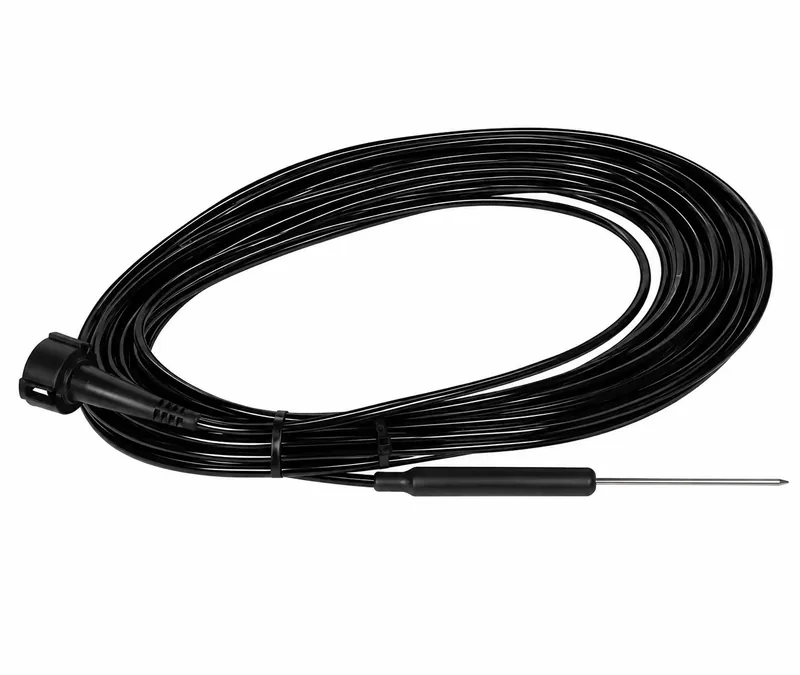
With margins of tenths of a degree, as in T107-e, the Chinese schedule at −0.2 °C or the EU option of −1 to 0 °C, a probe that reads high or low can void a 22-day treatment or cause chilling injury.
USDA PROBE probes are compatible with Carrier, Thermo King, Star Cool and Daikin controllers. They have 15 m of cable, a 2.5 mm stainless steel tube and ±0.1 °C accuracy. Every probe is tested before it leaves the factory. See the USDA sensor specifications and the part number cross-reference.
Tell us the destination, the fruit and your equipment brand and we will recommend the probe. Request a quotation or write to contact@usdaprobe.net.
More by country: South Africa · Australia · Egypt · Namibia · Italy · all countries · for exporters · for reefer technicians
Note: this guide is a reference and does not replace the official protocol in force. The schedule for each shipment is set by the plant protection authority of the destination country; check it before each season. USDA PROBE is an independent manufacturer, not affiliated with USDA or with Carrier, Thermo King, Star Cool or Daikin; brands are mentioned only to indicate compatibility. Updated: November 2026.
Frequently asked questions
What is the most common cold treatment temperature?
For Mediterranean fruit fly, the most widespread scheme is 1.11 °C or below for 14 to 15 days (T107-a / T107-a-1), with 1.67 °C and 2.22 °C options requiring more days. It is used by the US, Taiwan and Thailand, among others.
Does China use the USDA T107 schedules?
No. China sets its schedule in each bilateral protocol. For example, South African citrus goes at −0.2 °C for 16 days and Uruguayan lemons at 3 °C for 24 days.
Which is the coldest schedule?
Among fresh-fruit schedules, the US T107-e (−0.55 °C for 22 days, against false codling moth) and the −0.6 ± 0.6 °C schedules of Japan and Korea for South African citrus.
What happens if the temperature rises during the voyage?
It depends on the protocol. Under T107-e the treatment is extended, but it is voided above 1.11 °C. In China and Japan the count usually restarts at day 1, and Japan rejects consignments that need to finish treatment at destination.
How many probes does a container need?
Generally at least 3 pulp probes per container. Korea explicitly requires it for Australian oranges and APHIS asks for 4 in ship holds.
How are the probes calibrated?
In an ice bath at 0.00 °C before each load, recording each probe reading. See the calibration technical note.
See also: Supply air, return air and USDA probes →
Sources
- USDA APHIS – PPQ Treatment Manual, T107 schedules
- Federal Register – Citrus from Uruguay to the US (2013)
- Federal Register – Citrus from Peru (2006)
- Federal Register – Citrus from Colombia (2018)
- APHIS – Cold treatment documentation update (CTIS-M, 2024)
- SENASA Peru – Grapes under T107-a-1 and China protocol
- PromPerú – Peruvian blueberries to the US (2023)
- MGAP Uruguay – Lemons to China: 3 °C for 24 days
- GACC – Requirements for citrus from Uruguay
- GACC – Requirements for blueberries from Uruguay (2018)
- GACC – Requirements for grapes from Peru
- Agraria.pe – SENASA: cold treatment for blueberries to China and the US
- GACC – Table grapes from Brazil to China
- Produce Report – South African citrus to China (2026)
- Portal Frutícola – Chilean cherries to China with cold treatment
- FreshFruitPortal – EU requirements for oranges (false codling moth)
- Argentina – Citrus protocol to Japan
- South Africa – Citrus protocol to Japan
- Australian DAFF (MICoR) – Grapes to South Korea
- Australian DAFF – Japan and incomplete treatments
- GACC – Probe requirements (Zambia blueberry protocol)