01
Precision sensing
Precision NTC thermistor sensing optimized for cold-treatment temperature measurement, with electrical verification of every finished probe.
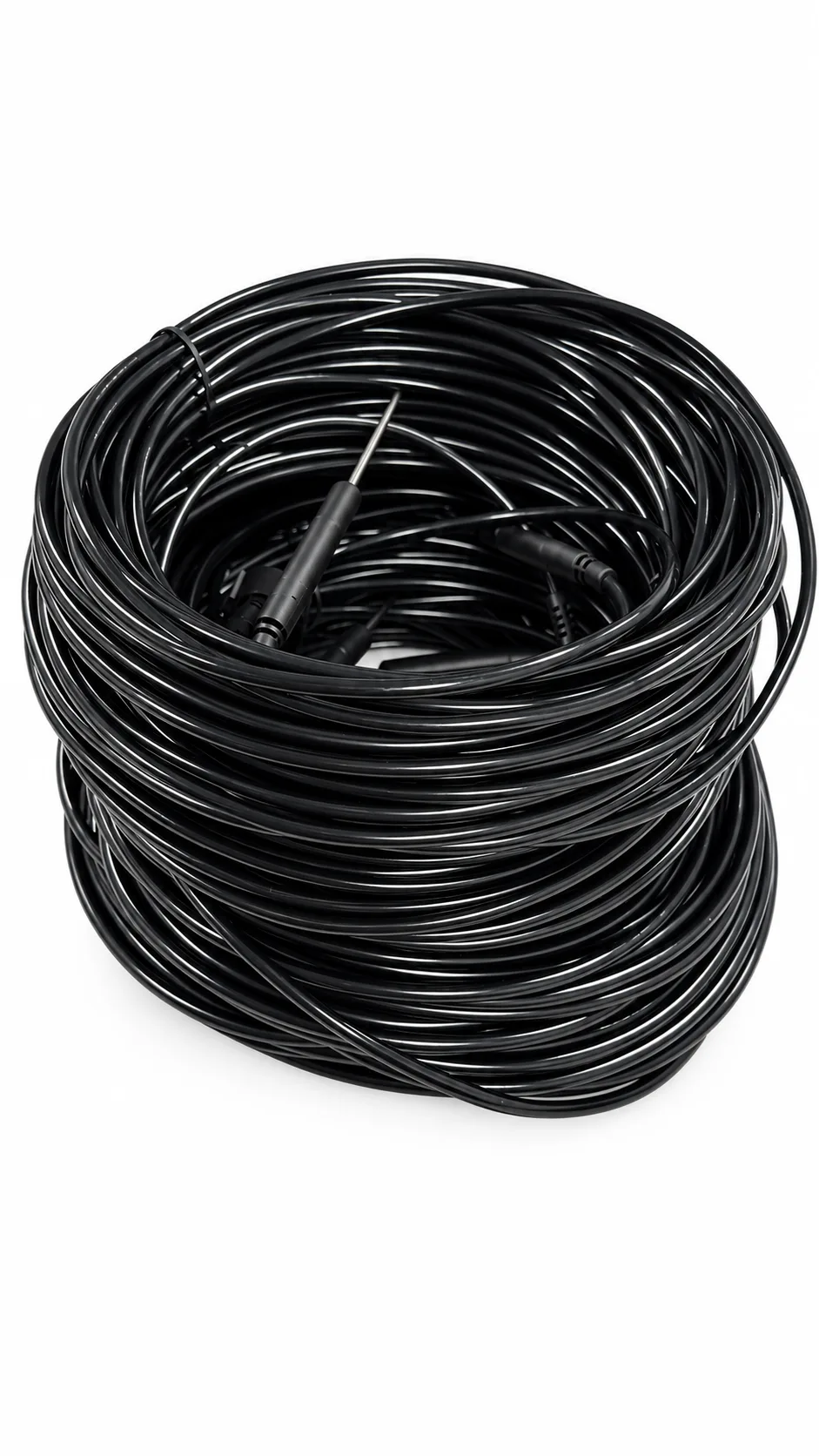
We manufacture USDA temperature sensors, also known as USDA probes, for fruit pulp temperature monitoring during refrigerated-container cold treatment. Explore specifications and request a configuration for your reefer application.

Electrical consistency, fast thermal response, robust sealing and traceable production are designed into every probe.
Precision NTC thermistor sensing optimized for cold-treatment temperature measurement, with electrical verification of every finished probe.
Stainless probe body and protected cable transition designed for repeated reefer handling and refrigerated environments.
Batch-level inspection and electrical verification can be documented for OEM, depot and distributor supply programs.
Standard configuration shown below. OEM and project-specific versions can be discussed.
Cold-treatment reefers use dedicated temperature channels and calibration procedures. Compatibility must be confirmed for the specific controller, electrical characteristic and connector configuration.
Applications for compatible DataCORDER-equipped reefers using USDA cold-treatment temperature channels.
USDA probe applications for compatible Thermo King reefer controllers and cold-treatment configurations.
USDA temperature-probe applications on compatible Star Cool cold-treatment installations.
USDA temperature-probe applications for compatible Daikin reefer equipment and treatment programs.
Our process is structured around repeatable checks and documented production batches.
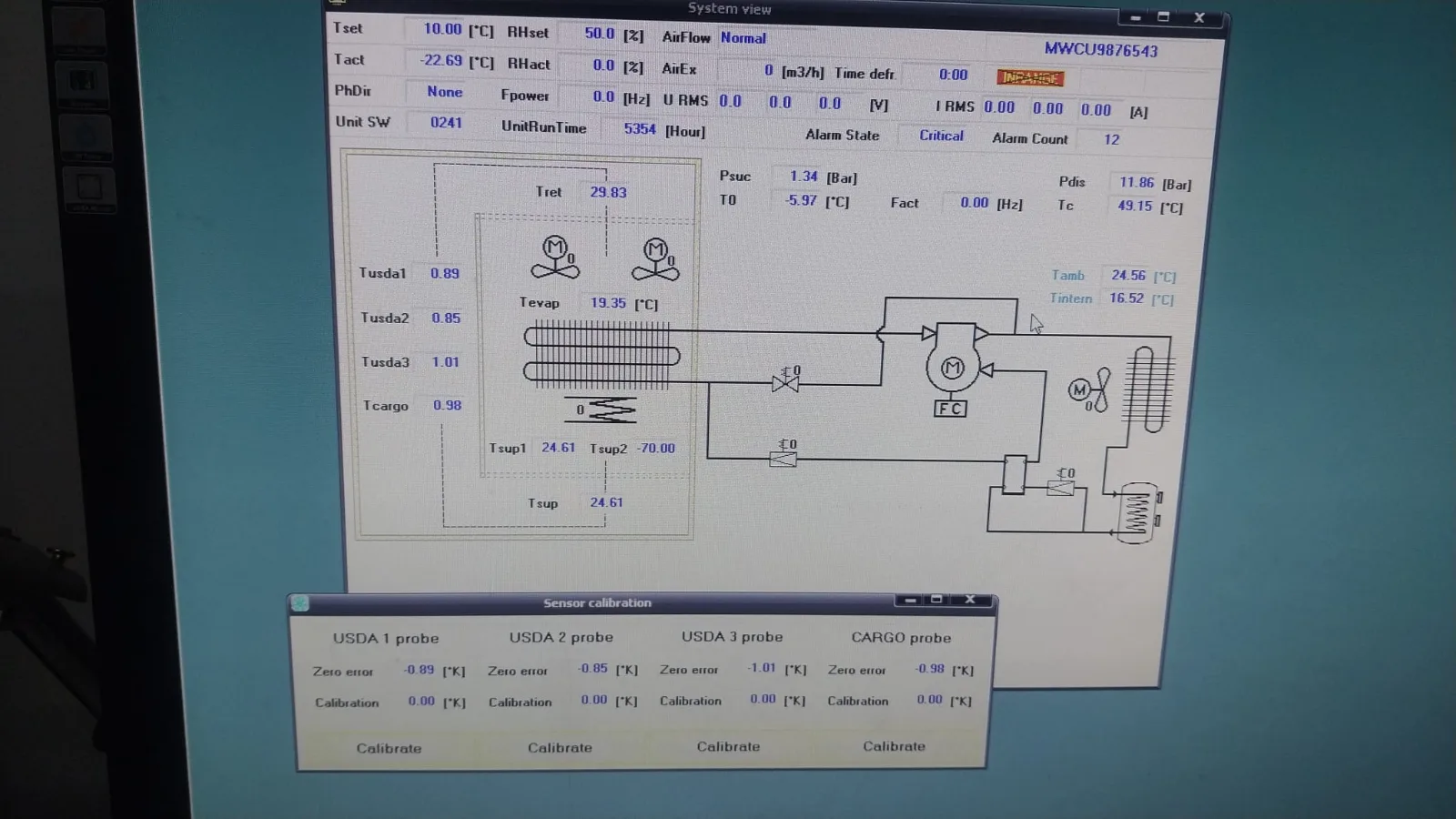
This field photo shows a reefer controller reading the individual USDA channels and the cargo probe while calibration values are checked. Cold-treatment programs depend on valid temperature records, which is why probe stability, sealing, repeatability and correct calibration are critical.
A valid probe calibration depends on a valid temperature reference. An ice-water bath must be prepared, stabilized and independently verified near 0.00 °C before controller readings are interpreted as probe error.
Use clean, finely divided ice made from distilled or deionized water and clean water of the same quality. Maintain a dense ice-water mixture rather than a large free-water layer.
Verify the reference with a suitable calibrated thermometer, preferably with 0.01 °C resolution and uncertainty small relative to the acceptance limits being evaluated.
Keep probe tips and the reference thermometer in the same stable measurement zone, with adequate immersion and no contact with the container wall or bottom.
An unknown bath-temperature error can change PASS/FAIL decisions and can be incorporated into a stored calibration offset. The controller can correct a probe offset, but it cannot correct an unknown error in the reference used to determine that offset.
For organizations that need consistent pulp-temperature sensing in reefer and export operations.
Fresh-fruit cold treatment programs and replacement probe requirements.
PTI, repair, service and sensor replacement inventories.
Temperature monitoring for refrigerated transport programs.
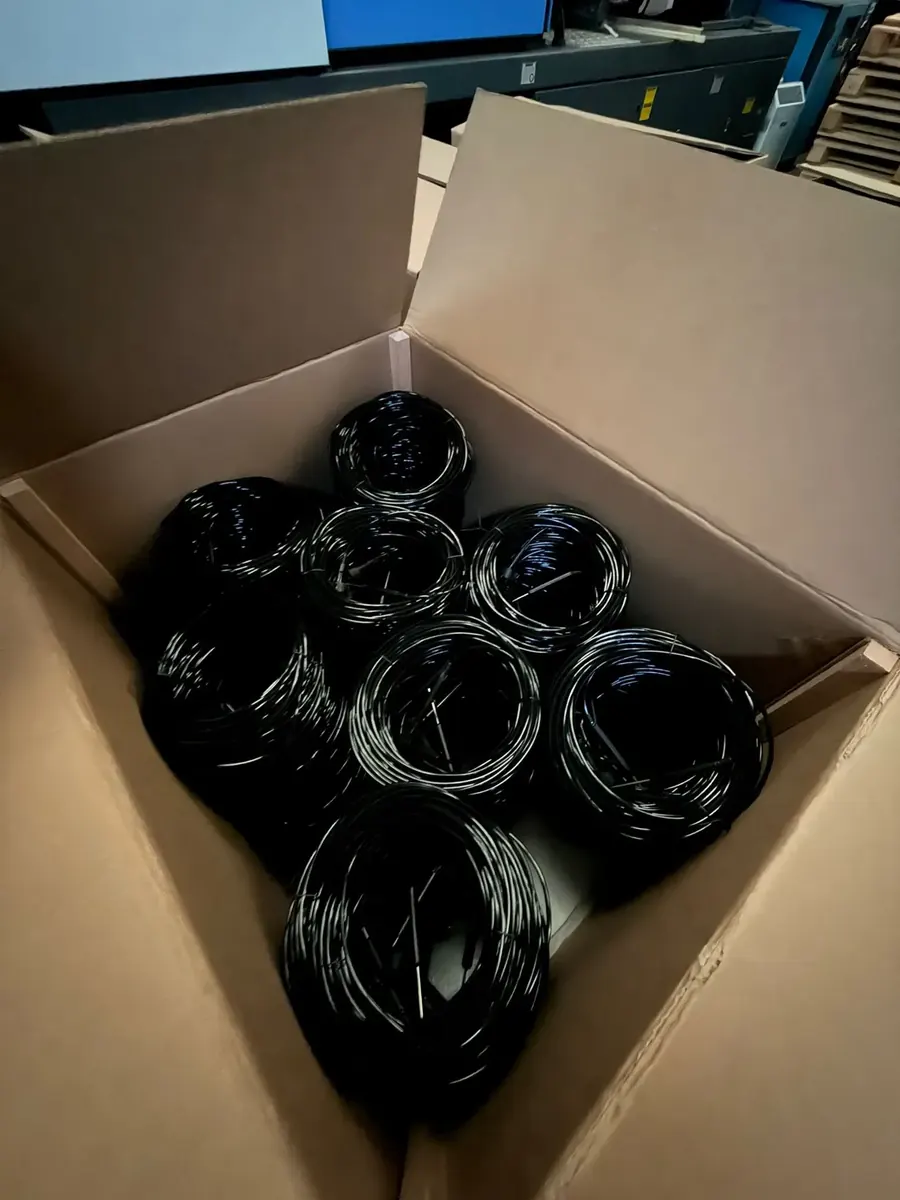
Volume supply, technical documentation and project-specific configurations.
USDA APHIS recognizes cold treatment as a non-chemical phytosanitary treatment. Reefer cold-treatment systems use remote temperature probes placed in cargo to record product temperature during the treatment period. Carrier service documentation, for example, describes three remote USDA probes connected to the unit DataCORDER and calibrated in an ice bath before use.
A USDA sensor, also called a USDA probe or pulp probe, measures temperature inside fruit during cold treatment. Connected to the reefer data logger, it supports the temperature record for the treatment.
Before loading, the probes are checked and calibrated following the equipment manufacturer’s procedure and the applicable treatment protocol. They are then placed in the fruit at the required cargo locations.
Send us the reefer make, model, controller and connector requirements. The NTC resistance–temperature characteristic and connector configuration must match the specific equipment; compatibility is confirmed case by case.
Send us your application details and we will review the most suitable probe configuration for your reefer, depot or cold-treatment program.
For faster technical review, include the reefer platform, quantity required, destination market and any calibration or connector requirement.
Reference price: USD 18 per probe (15 m cable).
USDA PROBE is an independent manufacturer and is not affiliated with or endorsed by the United States Department of Agriculture, Carrier, or other reefer equipment manufacturers. “USDA” refers to the regulatory cold-treatment context in which this type of probe is used. Product suitability should be verified for each equipment model and treatment program.